LilyGO T-Dongle-S3 with an external GPS
This is the ESP32-C5 rig in a different body: same firmware, same two modes, same button. The T-Dongle-S3 arrives as a USB stick with a colour screen, a button and an RGB LED already on it, so the build is four wires to a GPS module and nothing else. It lives in a car USB socket and looks like a memory stick.
What you get, and what you give up
- Screen included
- 160×80 colour LCD — fix, buffer and upload progress without a laptop
- No power wiring
- USB-A plug straight into a car socket
- RGB LED
- Colour and pattern, which reads better at a glance than one white LED
- 2.4 GHz only
- The ESP32-S3 has no 5 GHz radio. This is the real cost
Be clear-eyed about that last row. A 5 GHz-only SSID is invisible to this rig, and an increasing number of access points are exactly that — so a street surveyed with a dongle is less thoroughly surveyed than the same street with a C5. It is still a very good rig, and the one you will actually leave in the car.
Parts
- Dongle
- LilyGO T-Dongle-S3. ESP32-S3, 16 MB flash, 8 MB PSRAM, ST7735 LCD, TF slot
- GPS
- NEO-8M with an active antenna. A NEO-6M is fine; anything that speaks NMEA at 9600 will do
- Cable
- The 4-pin JST SH pigtail LilyGO ships, or four jumpers soldered to the pads
- Optional
- A USB-A extension, so the dongle sits on the dashboard rather than in the footwell
Wiring
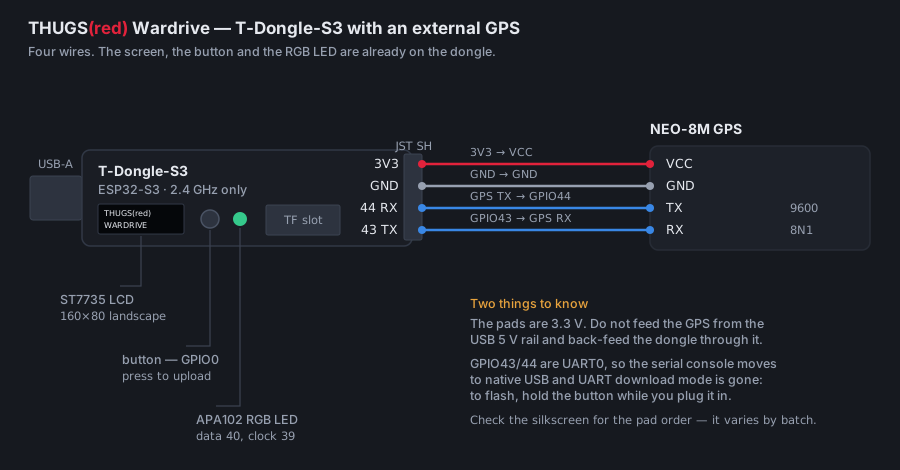
| From | To | Note |
|---|---|---|
GPS VCC | dongle 3V3 | 3.3 V — do not tap the USB 5 V rail instead |
GPS GND | dongle GND | common ground |
GPS TX | dongle GPIO44 | the dongle's RX. NMEA arrives here |
GPS RX | dongle GPIO43 | the dongle's TX. Only needed to configure the module |
Check the silkscreen for the pad order before you solder — it has moved between batches, and the diagram above is a wiring list rather than a photograph.
The one gotcha: GPIO43/44 are UART0
Those two pads are the chip's serial console. Handing them to the GPS costs you two things and it is better to know now than to discover it mid-flash:
- The log moves to native USB. Set
USB CDC On Boot: EnabledandSerialis the USB port; the sketch's output appears as normal. - UART download mode is gone. To flash: unplug, hold the button, plug it back in, release. The S3's native USB handles the upload.
How it behaves
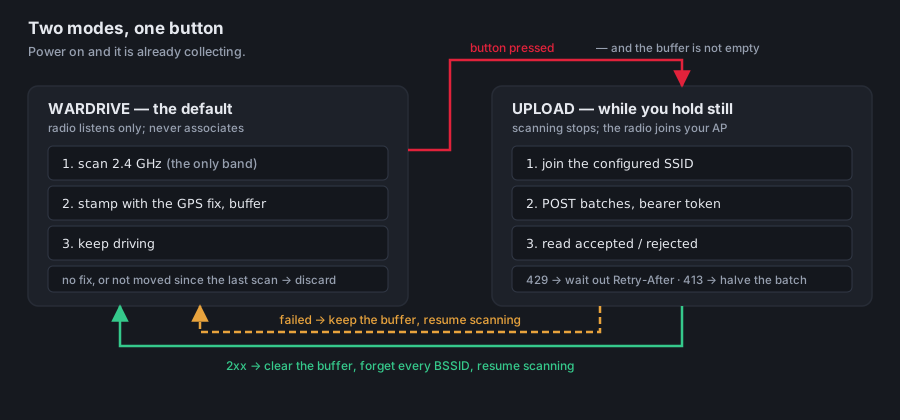
Plug it in and it is wardriving. It scans, stamps each network with the current fix, and buffers — skipping any scan with no fix, and any scan taken less than 15 m from the last one it kept, so a parked car does not fill the buffer with one street corner.
Press the button and it stops scanning, joins the access point in your config, and POSTs the buffer in batches of 200 with your bearer token. On a 2xx the buffer is cleared and every remembered BSSID forgotten — a clean slate — and it returns to scanning. On a failure it keeps everything and returns to scanning anyway, so you can try again at the next stop.
The screen and the colour
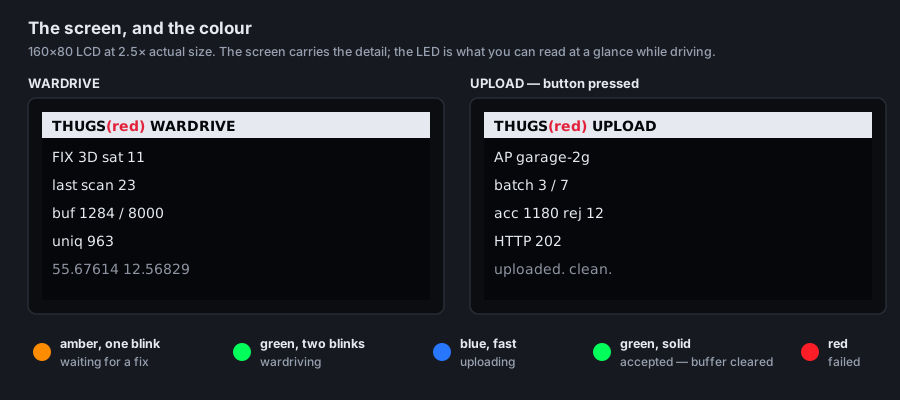
Colour says which mode, the blink rate says how it is doing — both, because a colour alone is easy to misremember at 50 km/h. Amber with one blink is waiting for a fix, green with two is wardriving, amber with three means the buffer is past 90%, blue at 5 Hz is uploading, solid green means accepted and cleared, red means the upload failed and the buffer was kept.
Get a token
Sign in and create one on the API tokens page, labelled for this dongle. It is shown once. A dongle is small and lives in a car, which is a good argument for giving it its own token: if it disappears, revoke that one and nothing else of yours is affected.
Build settings
- Board
ESP32S3 Dev Module— there is no LilyGO entry for this one- USB CDC On Boot
- Enabled — the GPS has taken UART0
- Flash size
- 16MB
- PSRAM
- OPI PSRAM
- Libraries
TinyGPSPlus,ArduinoJsonv7,Adafruit ST7735+Adafruit GFX
Get the four config lines right before you flash — access point, password and token — and the dongle needs nothing else from you ever again:
static const char *AP_SSID   = "your-hotspot";
static const char *AP_PASS   = "your-hotspot-password";
static const char *API_URL   = "https://wardrive.thugs.red/api/v1/ingest";
static const char *API_TOKEN = "wdrv_your_token_here";
The firmware
Structurally identical to the C5 sketch, section for section, so a diff between the two is short and readable. The listing is generated from the file, so it cannot drift from the download: thugs-wardrive-tdongle-s3.ino (19.2 KB).
/*
 * THUGS(red) Wardrive - wardriving firmware for the LilyGO T-Dongle-S3
 * -------------------------------------------------------------------
 * Target : LilyGO T-Dongle-S3 (ESP32-S3, 16 MB flash, 8 MB PSRAM)
 * GPS    : u-blox NEO-8M or NEO-6M on the dongle's 4-pin JST SH pads
 * Screen : the onboard ST7735 80x160 LCD, used landscape
 * API    : https://wardrive.thugs.red/api/v1/ingest
 *
 * Same firmware as thugs-wardrive-esp32c5.ino, same two modes, three
 * differences that come from the hardware:
 *
 *   1. The S3 is 2.4 GHz only. There is no 5 GHz band to alternate with, so a
 *      scan cycle is one scan. If you want 5 GHz, that is the ESP32-C5 build.
 *   2. Status goes to the onboard RGB LED (an APA102) as colour rather than to
 *      a single LED as a blink pattern - and to the LCD, which is not optional
 *      here because it is soldered on.
 *   3. The GPS lives on GPIO43/44, which are the pads LilyGO broke out. Those
 *      are also UART0, so the serial console moves to native USB.
 *
 * Behaviour
 *   Power on - plug it into a car USB socket - and it wardrives: scan, stamp
 *   with the GPS fix, buffer. The radio never associates while scanning.
 *
 *   Press the button while it is running and it stops scanning, joins the
 *   access point you configured below, and POSTs the buffer in batches. On
 *   success the buffer is cleared and it returns to scanning with a clean
 *   slate. On failure it keeps the buffer and returns to scanning anyway.
 *
 * Build
 *   Arduino IDE, esp32 board package 3.x, board "ESP32S3 Dev Module", and:
 *     USB CDC On Boot : Enabled      <- the log goes over USB, GPIO43/44 are the GPS
 *     Flash Size      : 16MB
 *     PSRAM           : OPI PSRAM
 *   Libraries: TinyGPSPlus, ArduinoJson v7, Adafruit ST7735 + Adafruit GFX.
 *
 *   Because UART0 is now the GPS, the board cannot fall into UART download
 *   mode. To flash it: unplug, hold the button, plug it in, release. The S3's
 *   native USB does the rest.
 */

#include <Arduino.h>
#include <WiFi.h>
#include <WiFiClientSecure.h>
#include <HTTPClient.h>
#include <SPI.h>
#include <TinyGPSPlus.h>
#include <ArduinoJson.h>
#include <Adafruit_GFX.h>
#include <Adafruit_ST7735.h>

// ===================== configure this ======================================

static const char *AP_SSID   = "your-hotspot";
static const char *AP_PASS   = "your-hotspot-password";
static const char *API_URL   = "https://wardrive.thugs.red/api/v1/ingest";
static const char *API_TOKEN = "wdrv_your_token_here";   // from /tokens

static const uint16_t BUFFER_SIZE = 8000;   // ~480 KB in PSRAM
static const uint16_t BATCH_SIZE  = 200;
static const float    MOVE_GATE_M = 15.0f;  // metres before a scan counts as new ground

static const uint32_t SCAN_MS_PER_CHANNEL = 300;
static const uint32_t SCAN_INTERVAL_MS    = 1500;

// ===================== pins ================================================
// The four pads on the dongle's JST SH connector are 3V3, GND, GPIO43, GPIO44.

#define GPS_RX_PIN 44   // GPS TX goes here
#define GPS_TX_PIN 43   // goes to GPS RX

#define BUTTON_PIN 0    // the dongle's button, and the S3 boot strapping pin

#define LED_DATA_PIN  40  // APA102 data
#define LED_CLOCK_PIN 39  // APA102 clock

#define TFT_CS   4
#define TFT_DC   2
#define TFT_RST  1
#define TFT_SCLK 5
#define TFT_MOSI 3
#define TFT_BL  38        // backlight. If your unit stays dark, invert BL_ON.

static const bool BL_ON = HIGH;
static const uint8_t LED_BRIGHTNESS = 6;   // APA102 global brightness, 1..31

// ===================== state ==============================================

struct Observation {
  uint8_t  bssid[6];
  char     ssid[33];
  int8_t   rssi;
  uint8_t  channel;
  uint8_t  enc;       // index into ENC_NAMES
  float    lat;
  float    lon;
  int16_t  alt;
  uint32_t ts;        // unix seconds, 0 = let the server use its own clock
};

static const char *ENC_NAMES[] = {
  "unknown", "open", "wep", "wpa", "wpa2", "wpa3", "wpa2_wpa3"
};

static Observation *buffer   = nullptr;
static uint16_t     capacity = 0;
static uint16_t     buffered = 0;
static uint32_t     dropped  = 0;

static const uint16_t SEEN_SLOTS = 4096;
static uint32_t      *seen = nullptr;
static uint16_t       seenCount = 0;

static TinyGPSPlus gps;
static double lastKeptLat = 0, lastKeptLon = 0;
static bool   hasKeptFix  = false;

static uint16_t lastFound  = 0;
static uint32_t lastScanAt = 0;

static Adafruit_ST7735 tft(TFT_CS, TFT_DC, TFT_RST);

enum RigState { RIG_WAIT_FIX, RIG_WARDRIVE, RIG_BUFFER_HIGH, RIG_UPLOAD, RIG_OK, RIG_FAIL };
static RigState rigState = RIG_WAIT_FIX;
static uint32_t rigStateSince = 0;

static char lastHttp[24] = "-";
static uint32_t lastAccepted = 0, lastRejected = 0;

// ===================== RGB LED ============================================
//
// The APA102 wants a start frame, one 32-bit frame per LED and an end frame.
// Bit-banging it is a dozen lines and saves pulling in a library for one LED.

static void apaByte(uint8_t value) {
  for (int8_t bit = 7; bit >= 0; bit--) {
    digitalWrite(LED_DATA_PIN, (value >> bit) & 1);
    digitalWrite(LED_CLOCK_PIN, HIGH);
    digitalWrite(LED_CLOCK_PIN, LOW);
  }
}

static void ledColour(uint8_t r, uint8_t g, uint8_t b) {
  apaByte(0x00); apaByte(0x00); apaByte(0x00); apaByte(0x00);   // start frame
  apaByte(0xE0 | (LED_BRIGHTNESS & 0x1F));                      // 111 + brightness
  apaByte(b); apaByte(g); apaByte(r);                           // APA102 order is BGR
  apaByte(0xFF); apaByte(0xFF); apaByte(0xFF); apaByte(0xFF);   // end frame
}

static void ledOff() { ledColour(0, 0, 0); }

// Colour says what mode it is in; the blink rate says how it is doing. Both,
// because a colour alone is easy to misremember in a moving car.
struct LedLook { uint16_t slotMs; uint8_t slots; uint32_t mask; uint8_t r, g, b; };

static LedLook lookFor(RigState state) {
  switch (state) {
    case RIG_WAIT_FIX:    return { 100, 20, 0b1,      255, 140,   0 };  // amber, one blink
    case RIG_WARDRIVE:    return { 100, 20, 0b101,      0, 255,  90 };  // green, two blinks
    case RIG_BUFFER_HIGH: return { 100, 20, 0b10101, 255, 140,   0 };  // amber, three blinks
    case RIG_UPLOAD:      return { 100,  2, 0b01,      40, 120, 255 };  // blue, 5 Hz
    case RIG_OK:          return { 100, 20, 0xFFFFF,   0, 255,  90 };  // green, solid
    case RIG_FAIL:        return {  60, 10, 0b10101, 255,  30,  40 };  // red, stutter
  }
  return { 100, 20, 0b1, 255, 255, 255 };
}

static void setState(RigState state) {
  if (state != rigState) {
    rigState = state;
    rigStateSince = millis();
  }
}

static void updateLed() {
  LedLook look = lookFor(rigState);
  uint32_t slot = ((millis() - rigStateSince) / look.slotMs) % look.slots;
  if ((look.mask >> slot) & 1) ledColour(look.r, look.g, look.b);
  else                         ledOff();
}

static void ledHold(RigState state, uint32_t ms) {
  setState(state);
  uint32_t until = millis() + ms;
  while (millis() < until) {
    updateLed();
    delay(5);
  }
}

// ===================== screen =============================================

static const uint16_t INK   = ST77XX_WHITE;
static const uint16_t PAPER = ST77XX_BLACK;
static const uint16_t BRAND = ST77XX_RED;

static void screenBegin() {
  pinMode(TFT_BL, OUTPUT);
  digitalWrite(TFT_BL, BL_ON);

  SPI.begin(TFT_SCLK, -1, TFT_MOSI, TFT_CS);
  tft.initR(INITR_MINI160x80);
  tft.setRotation(1);            // landscape: 160 x 80
  tft.fillScreen(PAPER);
  tft.setTextWrap(false);
}

static void screenHeader(const char *mode) {
  tft.fillRect(0, 0, 160, 12, INK);
  tft.setTextColor(PAPER);
  tft.setTextSize(1);
  tft.setCursor(2, 2);
  tft.print("THUGS");
  tft.setTextColor(BRAND, INK);
  tft.print("(red)");
  tft.setTextColor(PAPER, INK);
  tft.print(" ");
  tft.print(mode);
}

static void screenLine(uint8_t row, const char *text) {
  const int16_t y = 16 + row * 11;
  tft.fillRect(0, y, 160, 10, PAPER);
  tft.setTextColor(INK);
  tft.setCursor(2, y);
  tft.print(text);
}

static void screenWardrive() {
  char line[28];
  screenHeader("WARDRIVE");

  if (gps.location.isValid()) {
    snprintf(line, sizeof(line), "FIX 3D  sat %d", (int) gps.satellites.value());
  } else {
    snprintf(line, sizeof(line), "no fix  sat %d", (int) gps.satellites.value());
  }
  screenLine(0, line);

  snprintf(line, sizeof(line), "last scan  %u", lastFound);
  screenLine(1, line);
  snprintf(line, sizeof(line), "buf  %u / %u", buffered, capacity);
  screenLine(2, line);
  snprintf(line, sizeof(line), "uniq %u", seenCount);
  screenLine(3, line);

  if (gps.location.isValid()) {
    snprintf(line, sizeof(line), "%.5f %.5f", gps.location.lat(), gps.location.lng());
    screenLine(4, line);
  }
}

static void screenUpload(uint16_t batch, uint16_t batches) {
  char line[28];
  screenHeader("UPLOAD");

  snprintf(line, sizeof(line), "AP  %.18s", AP_SSID);
  screenLine(0, line);
  snprintf(line, sizeof(line), "batch  %u / %u", batch, batches);
  screenLine(1, line);
  snprintf(line, sizeof(line), "acc %lu rej %lu", (unsigned long) lastAccepted, (unsigned long) lastRejected);
  screenLine(2, line);
  snprintf(line, sizeof(line), "HTTP %s", lastHttp);
  screenLine(3, line);
  screenLine(4, "");
}

static void screenBanner(const char *mode, const char *text) {
  screenHeader(mode);
  screenLine(0, text);
  for (uint8_t row = 1; row < 5; row++) screenLine(row, "");
}

// ===================== helpers ============================================

static float metresBetween(double lat1, double lon1, double lat2, double lon2) {
  const double R = 6371000.0;
  double latRad = radians((lat1 + lat2) / 2.0);
  double dx = radians(lon2 - lon1) * cos(latRad);
  double dy = radians(lat2 - lat1);
  return (float) (R * sqrt(dx * dx + dy * dy));
}

// GPS date/time to unix seconds, written out rather than trusting mktime()'s
// timezone handling.
static uint32_t gpsEpoch() {
  if (!gps.date.isValid() || !gps.time.isValid() || gps.date.year() < 2020) {
    return 0;
  }
  int32_t y = gps.date.year();
  int32_t m = gps.date.month();
  int32_t d = gps.date.day();

  y -= m <= 2;
  int32_t era = (y >= 0 ? y : y - 399) / 400;
  uint32_t yoe = (uint32_t) (y - era * 400);
  uint32_t doy = (153 * (m + (m > 2 ? -3 : 9)) + 2) / 5 + d - 1;
  uint32_t doe = yoe * 365 + yoe / 4 - yoe / 100 + doy;
  int32_t days = era * 146097 + (int32_t) doe - 719468;

  return (uint32_t) days * 86400u
       + gps.time.hour() * 3600u + gps.time.minute() * 60u + gps.time.second();
}

static uint8_t encIndex(wifi_auth_mode_t mode) {
  switch (mode) {
    case WIFI_AUTH_OPEN:           return 1;
    case WIFI_AUTH_WEP:            return 2;
    case WIFI_AUTH_WPA_PSK:        return 3;
    case WIFI_AUTH_WPA2_PSK:
    case WIFI_AUTH_WPA_WPA2_PSK:   return 4;
    case WIFI_AUTH_WPA3_PSK:       return 5;
    case WIFI_AUTH_WPA2_WPA3_PSK:  return 6;
    default:                       return 0;
  }
}

static uint16_t frequencyFor(uint8_t channel) {
  if (channel == 14) return 2484;
  return 2407 + 5 * channel;
}

static uint32_t bssidHash(const uint8_t *b) {
  uint32_t h = 2166136261u;
  for (int i = 0; i < 6; i++) { h ^= b[i]; h *= 16777619u; }
  return h ? h : 1;
}

static void seenAdd(const uint8_t *bssid) {
  uint32_t h = bssidHash(bssid);
  for (uint16_t probe = 0; probe < 64; probe++) {
    uint16_t slot = (h + probe) & (SEEN_SLOTS - 1);
    if (seen[slot] == h) return;
    if (seen[slot] == 0) { seen[slot] = h; seenCount++; return; }
  }
}

static void bufferReset() {
  buffered = 0;
  dropped = 0;
  seenCount = 0;
  memset(seen, 0, SEEN_SLOTS * sizeof(uint32_t));
  hasKeptFix = false;
}

// ===================== wardrive mode ======================================

static void feedGps(uint32_t ms) {
  uint32_t until = millis() + ms;
  do {
    while (Serial1.available()) gps.encode(Serial1.read());
    updateLed();
  } while (millis() < until);
}

static void scanCycle() {
  if (!gps.location.isValid()) {
    setState(RIG_WAIT_FIX);
    screenWardrive();
    lastScanAt = millis();
    return;
  }

  double lat = gps.location.lat();
  double lon = gps.location.lng();

  if (hasKeptFix && metresBetween(lastKeptLat, lastKeptLon, lat, lon) < MOVE_GATE_M) {
    lastScanAt = millis();
    return;                       // parked; the same corner again is not data
  }

  uint32_t ts = gpsEpoch();
  int found = WiFi.scanNetworks(false, true, false, SCAN_MS_PER_CHANNEL);
  if (found < 0) found = 0;
  lastFound = (uint16_t) found;

  for (int i = 0; i < found; i++) {
    if (buffered >= capacity) { dropped++; break; }

    Observation &o = buffer[buffered];
    memcpy(o.bssid, WiFi.BSSID(i), 6);
    strncpy(o.ssid, WiFi.SSID(i).c_str(), sizeof(o.ssid) - 1);
    o.ssid[sizeof(o.ssid) - 1] = '\0';
    o.rssi    = (int8_t) WiFi.RSSI(i);
    o.channel = (uint8_t) WiFi.channel(i);
    o.enc     = encIndex(WiFi.encryptionType(i));
    o.lat     = (float) lat;
    o.lon     = (float) lon;
    o.alt     = (int16_t) (gps.altitude.isValid() ? gps.altitude.meters() : 0);
    o.ts      = ts;

    seenAdd(o.bssid);
    buffered++;
  }

  WiFi.scanDelete();

  lastKeptLat = lat;
  lastKeptLon = lon;
  hasKeptFix = true;
  lastScanAt = millis();

  setState(buffered > (uint32_t) capacity * 9 / 10 ? RIG_BUFFER_HIGH : RIG_WARDRIVE);
  screenWardrive();

  Serial.printf("[scan] found=%d buffered=%u/%u uniq=%u dropped=%lu\n",
                found, buffered, capacity, seenCount, (unsigned long) dropped);
}

// ===================== upload mode ========================================

enum PostResult { POST_SENT, POST_RETRY, POST_ABORT };

static PostResult postRange(uint16_t from, uint16_t count) {
  JsonDocument doc;
  JsonArray arr = doc["observations"].to<JsonArray>();

  for (uint16_t i = from; i < from + count; i++) {
    const Observation &o = buffer[i];
    char mac[18];
    snprintf(mac, sizeof(mac), "%02x:%02x:%02x:%02x:%02x:%02x",
             o.bssid[0], o.bssid[1], o.bssid[2], o.bssid[3], o.bssid[4], o.bssid[5]);

    JsonObject r = arr.add<JsonObject>();
    r["bssid"] = mac;
    if (o.ssid[0] != '\0') r["ssid"] = o.ssid;
    r["enc"]  = ENC_NAMES[o.enc];
    r["rssi"] = o.rssi;
    r["ch"]   = o.channel;
    r["freq"] = frequencyFor(o.channel);
    r["lat"]  = serialized(String(o.lat, 6));
    r["lon"]  = serialized(String(o.lon, 6));
    if (o.alt != 0) r["alt"] = o.alt;
    if (o.ts != 0)  r["ts"]  = o.ts;
  }

  String body;
  serializeJson(doc, body);

  WiFiClientSecure client;
  // Not verifying the certificate: this rig has no clock and no CA bundle. The
  // token is the only secret on the wire and it is revocable from /tokens. Pin
  // the root with setCACert() instead if you would rather not make that trade.
  client.setInsecure();

  HTTPClient http;
  http.setTimeout(20000);
  if (!http.begin(client, API_URL)) return POST_RETRY;

  const char *wanted[] = { "Retry-After" };
  http.collectHeaders(wanted, 1);
  http.addHeader("Content-Type", "application/json");
  http.addHeader("Authorization", String("Bearer ") + API_TOKEN);
  http.addHeader("User-Agent", "thugs-wardrive-tdongle/1.0");

  int code = http.POST(body);
  snprintf(lastHttp, sizeof(lastHttp), "%d", code);
  String payload = http.getString();
  String retryAfter = http.header("Retry-After");
  http.end();

  Serial.printf("[post] %u records -> HTTP %d %s\n", count, code, payload.c_str());

  if (code == 200 || code == 202) {
    JsonDocument res;
    if (deserializeJson(res, payload) == DeserializationError::Ok) {
      lastAccepted += res["accepted"] | 0;
      lastRejected += res["rejected"] | 0;
    }
    return POST_SENT;
  }

  if (code == 429) {
    uint32_t wait = retryAfter.toInt();
    if (wait == 0 || wait > 120) wait = 60;
    Serial.printf("[post] rate limited, waiting %us\n", wait);
    uint32_t until = millis() + wait * 1000;
    while (millis() < until) { updateLed(); delay(10); }
    return POST_RETRY;
  }

  if (code == 401 || code == 422) return POST_ABORT;   // token or batch is wrong
  if (code == 503) return POST_ABORT;                  // ingest off, or maintenance
  return POST_RETRY;
}

static bool uploadBuffer() {
  if (buffered == 0) return true;

  setState(RIG_UPLOAD);
  lastAccepted = lastRejected = 0;
  strncpy(lastHttp, "...", sizeof(lastHttp));

  WiFi.scanDelete();
  WiFi.mode(WIFI_STA);
  WiFi.begin(AP_SSID, AP_PASS);

  screenBanner("UPLOAD", "joining AP...");
  uint32_t until = millis() + 20000;
  while (WiFi.status() != WL_CONNECTED && millis() < until) { updateLed(); delay(50); }

  if (WiFi.status() != WL_CONNECTED) {
    Serial.println("[upload] no AP; keeping the buffer");
    return false;
  }

  uint16_t batches = (buffered + BATCH_SIZE - 1) / BATCH_SIZE;
  uint16_t sentTo = 0;
  uint16_t batchNo = 0;

  while (sentTo < buffered) {
    uint16_t count = min<uint16_t>(BATCH_SIZE, buffered - sentTo);
    batchNo++;
    screenUpload(batchNo, batches);

    PostResult result = POST_RETRY;
    for (uint8_t attempt = 0; attempt < 4 && result == POST_RETRY; attempt++) {
      if (attempt > 0) {
        uint32_t wake = millis() + (1000u << attempt);   // 2s, 4s, 8s
        while (millis() < wake) { updateLed(); delay(10); }
      }
      result = postRange(sentTo, count);
      if (result == POST_RETRY && count > 1) count /= 2;
    }

    if (result != POST_SENT) {
      Serial.println("[upload] giving up; keeping what is left");
      return false;
    }
    sentTo += count;
  }

  return true;
}

static bool buttonPressed() {
  if (digitalRead(BUTTON_PIN) != LOW) return false;
  delay(80);
  if (digitalRead(BUTTON_PIN) != LOW) return false;
  while (digitalRead(BUTTON_PIN) == LOW) { updateLed(); delay(10); }
  return true;
}

static void enterWardriveMode() {
  WiFi.disconnect(true, true);
  WiFi.mode(WIFI_STA);
  lastScanAt = 0;
  setState(gps.location.isValid() ? RIG_WARDRIVE : RIG_WAIT_FIX);
  screenWardrive();
}

// ===================== setup / loop =======================================

void setup() {
  pinMode(LED_DATA_PIN, OUTPUT);
  pinMode(LED_CLOCK_PIN, OUTPUT);
  ledOff();
  pinMode(BUTTON_PIN, INPUT_PULLUP);

  Serial.begin(115200);                  // native USB, because UART0 is the GPS
  Serial1.begin(9600, SERIAL_8N1, GPS_RX_PIN, GPS_TX_PIN);

  screenBegin();
  screenBanner("WARDRIVE", "booting...");

  capacity = BUFFER_SIZE;
  buffer = (Observation *) ps_malloc(sizeof(Observation) * capacity);
  if (buffer == nullptr) {
    // PSRAM missing or not enabled in the board menu. Shrink rather than fail;
    // every bounds check reads `capacity`, never BUFFER_SIZE.
    capacity = 1500;
    Serial.println("[boot] no PSRAM; falling back to a smaller buffer");
    buffer = (Observation *) malloc(sizeof(Observation) * capacity);
  }
  seen = (uint32_t *) calloc(SEEN_SLOTS, sizeof(uint32_t));

  if (buffer == nullptr || seen == nullptr) {
    Serial.println("[boot] out of memory; halting");
    screenBanner("WARDRIVE", "out of memory");
    while (true) { ledHold(RIG_FAIL, 1000); }
  }

  Serial.println("THUGS(red) Wardrive - T-Dongle-S3");
  Serial.printf("[boot] buffer=%u records\n", capacity);

  enterWardriveMode();
}

void loop() {
  feedGps(200);

  if (buttonPressed()) {
    Serial.printf("[button] upload requested with %u buffered\n", buffered);
    bool ok = uploadBuffer();

    if (ok) {
      bufferReset();                     // clean slate: no records, no BSSIDs, no fix
      screenBanner("UPLOAD", "uploaded. clean.");
      ledHold(RIG_OK, 2000);
    } else {
      screenBanner("UPLOAD", "failed - kept buffer");
      ledHold(RIG_FAIL, 2000);
    }

    enterWardriveMode();
    return;
  }

  if (millis() - lastScanAt >= SCAN_INTERVAL_MS) {
    scanCycle();
  }
}
Check it works
The serial monitor is the USB port now, at 115200:
THUGS(red) Wardrive - T-Dongle-S3
[boot] buffer=8000 records
[scan] found=23 buffered=23/8000 uniq=23 dropped=0
[scan] found=19 buffered=42/8000 uniq=38 dropped=0
[button] upload requested with 42 buffered
[post] 42 records -> HTTP 202 {"accepted":41,"rejected":1,
       "errors":[{"index":7,"reason":"unusable_gps_fix"}]}
Then check the map. Every field and status code the rig can receive is documented on the API page.
When it does not work
- Screen stays black
- Backlight polarity varies. Invert
BL_ONin the sketch. - Screen works, no GPS
TX/RXswapped, or the module is not on 9600. Swapping them harms nothing — try it.- Nothing on the serial monitor
USB CDC On Bootis still disabled, so the log is going out of the pads the GPS is on.- Will not enter flashing mode
- Unplug, hold the button, plug in, release. UART download mode is unavailable by design here.
- Dongle gets hot
- Normal-ish for an S3 scanning continuously in a plastic shell. Give it airflow rather than a sunny dashboard.
HTTP 401/429/413- Same as any client: bad token, too often, too big. The error table has the full list.
Notes from experience
- A car USB socket is often on the ignition circuit, so the rig cycles when you do. That is fine — the buffer only survives while powered, so upload before a long stop rather than after it.
- The TF slot is unused by this firmware. Buffering to card would survive a power cut and is the obvious next feature; the pins are in the sketch header if you want to write it.
- The USB-A plug is the only power path. A hub or a long extension with thin conductors will brown it out mid-scan.
- Same certificate trade as the C5 build:
setInsecure(), because the dongle has no clock or CA bundle at boot. The token is revocable; pin the root withsetCACert()if you would rather.
Want 5 GHz as well? That is the ESP32-C5 build — same firmware, one more band. Writing your own client instead? Do it yourself via API.